

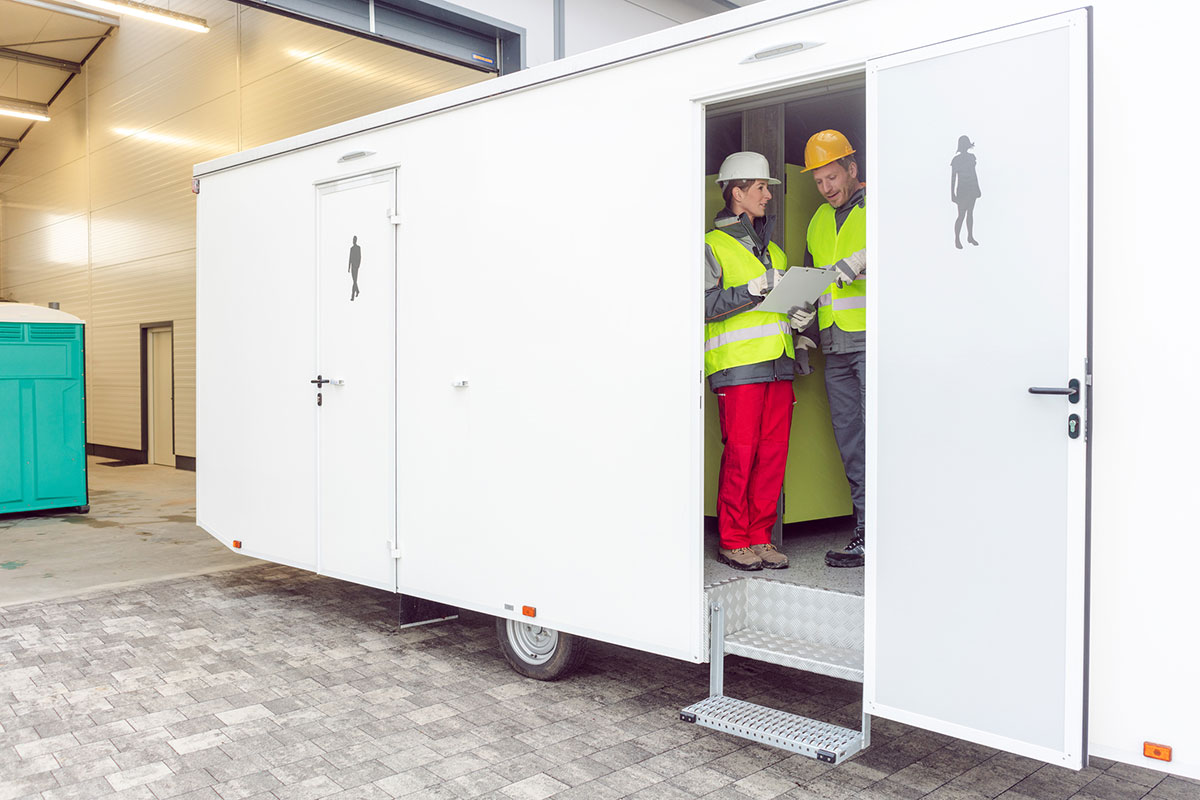
16 Sep How to Choose the Right Welfare Setup for Your Construction Project
Providing suitable welfare units for construction sites is more than a practical consideration. Welfare facilities are an essential part of running a safe, compliant and well-managed construction project.
But with mobile welfare units, static cabins, toilets, offices and increasingly sophisticated hybrid systems available, choosing the right setup isn’t always straightforward.
The best solution depends on workforce size, project duration, site location, available services and whether your facilities need to move as work progresses.
Here are the main factors to consider when choosing the right site welfare facilities for your project.
What Is a Welfare Unit?
A welfare unit provides workers with essential facilities while they are on site. Depending on its design, a welfare unit for a construction site may include:
- Toilets and washing facilities
- Canteen and rest areas
- Seating and tables
- Facilities for preparing food and hot drinks
- Changing and drying areas
- Secure storage
- Office space
Smaller projects can often use a self-contained unit combining several functions, while larger developments may require multiple cabins and facilities.
EasyCabin manufactures a wide range of construction site welfare units, including mobile and static welfare cabins, toilets, showers, site offices and storage.
What Welfare Facilities Must a Construction Site Provide?
Under the Construction (Design and Management) Regulations 2015 – commonly known as CDM 2015 – suitable welfare arrangements need to be considered from the beginning of a construction project.
The Health and Safety Executive’s construction welfare guidance states that workers must have access to toilets and suitable facilities for washing, changing, eating and resting.
Contractors are responsible for providing suitable welfare facilities, while clients must ensure appropriate arrangements are in place.
The exact welfare facilities on site will depend on the nature and scale of the project. A small residential development will naturally have different requirements from a major infrastructure project with a large workforce.
The important point is that welfare shouldn’t be something organised after construction begins. It needs to form part of initial site planning.
Understanding Welfare Unit Requirements for Construction Sites
When deciding what building site welfare units you need, consider five questions.
How many people will be working on site?
Your facilities need sufficient capacity for the workforce using them.
How long will the project last?
A short-term or moving project may suit mobile facilities, while a long-term development could benefit from a larger static setup.
Will everyone work in one location?
Roadworks, utilities and infrastructure projects can cover significant areas, making mobile welfare particularly useful.
What services are available?
Consider electricity, water, drainage and fuel. Remote sites may need self-contained or off-grid facilities.
What work is being carried out?
Particularly dirty or hazardous work may create additional washing, changing or shower requirements.
Answering these questions before ordering your welfare facilities can prevent costly changes later.
How Many Welfare Units Per Person on Site in Construction?
There isn’t a simple rule requiring one complete welfare unit for every set number of workers.
Instead, provision must be suitable and sufficient for the workforce and type of work being undertaken.
That means considering both the number of people and the facilities within each cabin. A unit seating eight people may work well for one site but be insufficient if a much larger workforce needs to take breaks simultaneously.
Toilet, washing and changing capacity also needs to reflect workforce requirements.
Rather than focusing solely on how many welfare units per person on site in construction, assess the capacity and facilities provided by your entire welfare setup.
Static vs Towable Construction Site Welfare Units
One of the biggest decisions is whether to choose static or mobile accommodation.
Towable Welfare Units
Towable units are ideal where flexibility matters.
They can suit:
- Shorter projects
- Roadworks and utilities
- Remote locations
- Smaller teams
- Sites that regularly move
- Projects where welfare needs to follow the workforce
EasyCabin’s Ecosmart mobile welfare units combine towable designs with hybrid technology and are available in different sizes, capacities and layouts.
Models such as the 16ft Ecosmart welfare unit use hydraulic axle systems to simplify transportation and deployment.
Static Welfare Units
Static welfare cabins can be more suitable for long-term projects and larger site compounds.
They can provide greater capacity and be combined with toilets, offices, showers, changing areas and other accommodation.
For example, EasyCabin’s 28ft Ecostatic welfare unit provides welfare facilities for teams of up to 24 people.
Large projects may use both approaches – a central static compound supported by mobile welfare units closer to teams working elsewhere on site.
Choosing Eco-Friendly Welfare Units
Sustainability is increasingly important when choosing welfare units for construction sites in the UK.
Traditional generator-powered facilities can consume significant quantities of fuel over a long project.
Modern hybrid systems can reduce generator use through technologies including:
- Battery storage
- Solar integration
- Intelligent power management
- Energy-efficient heating and lighting
- HVO-compatible generators
EasyCabin’s construction welfare range includes hybrid and solar-integrated options designed to reduce fuel consumption, operating costs, noise and carbon emissions.
For contractors working towards carbon reduction or ESG targets, the efficiency of site welfare can therefore form part of the project’s wider environmental strategy.
What Does Welfare Unit Hire Cost Per Week?
The welfare unit hire cost per week varies according to unit size, specification, location, hire duration and delivery requirements.
A compact towable unit will naturally have a different cost from a large static compound incorporating toilets, canteen space and offices.
Fuel consumption and servicing can also affect the total welfare unit hire cost, so operating efficiency is worth considering alongside the weekly rental figure.
EasyCabin manufactures welfare units for purchase rather than direct hire. However, EasyCabin units are widely used within hire fleets across the UK, and the company can recommend suitable hire suppliers if purchasing isn’t right for your project.
Choosing the Right Welfare Unit for Your Construction Site
There is no single setup that suits every project.
The right solution should balance:
- CDM requirements
- Workforce numbers
- Project duration
- Site location and access
- Mobility requirements
- Power and water availability
- Running costs
- Environmental targets
Planning these factors early makes it easier to choose welfare units on construction sites that provide everything workers need without unnecessarily over-specifying the project.
Find the Right Welfare Solution with EasyCabin
EasyCabin designs and manufactures mobile, static and hybrid welfare units for construction sites in the UK, with solutions available for construction, utilities, infrastructure and remote working environments.
From compact towable cabins to high-capacity static accommodation and low-emission hybrid systems, the right setup will depend on your workforce and site requirements.
If you’re unsure which configuration would work best, request a quote from EasyCabin and discuss your workforce size, project duration, site conditions and power requirements with the team.
Sorry, the comment form is closed at this time.