

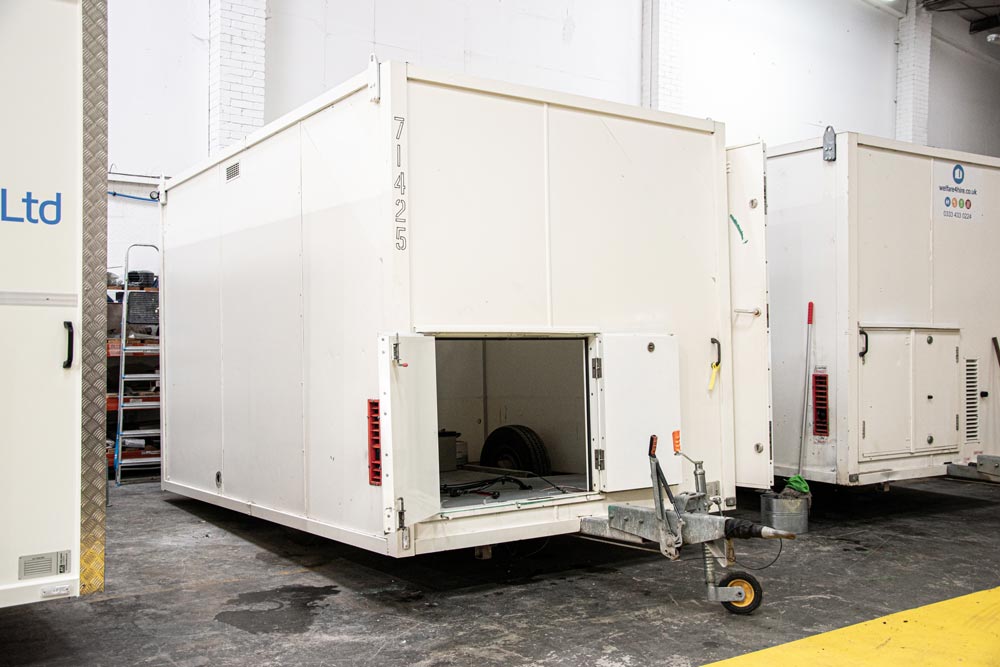
04 Nov Refurbish or Replace? How to Extend the Life of Your Welfare Fleet
An ageing welfare unit does not automatically need replacing.
For hire companies and fleet operators, the more useful question is whether the unit still has enough structural and operational life to justify further investment.
In some cases, routine servicing and targeted repairs are enough. In others, a full welfare fleet refurbishment can return an older unit to dependable working condition while upgrading key systems. Eventually, however, replacement becomes the more practical option.
So, how do you decide whether to refurbish or replace a welfare unit?
Start With the Condition of the Core Unit
Cosmetic wear should not be confused with the end of a unit’s working life.
Paintwork, internal finishes, electrical components, plumbing and heating systems can all deteriorate while the underlying structure remains serviceable.
EasyCabin manufactures its units with features including galvanised chassis and exteriors, high-strength composite walls and modular systems designed to make servicing, repair and future upgrades easier.
Before replacing a unit, assess:
- Chassis and structural condition
- Running gear
- Body panels and doors
- Flooring and interior surfaces
- Electrical systems
- Plumbing
- Heating
- Generator or power system
- Solar and battery equipment
- General presentation
If the core structure remains sound, refurbishment may still offer significant usable life.
When Does Routine Servicing Make More Sense?
Not every tired welfare unit needs a complete rebuild.
Regular welfare unit servicing can address wear before small faults develop into larger problems.
EasyCabin’s 360° support includes nationwide servicing, repairs, remote diagnostics, parts supply and technical assistance for individual units and large hire fleets.
Servicing may be the best approach where the unit is fundamentally in good condition but needs work such as:
- Running-gear maintenance
- Generator servicing
- Plumbing repairs
- Electrical checks
- Heating maintenance
- Replacement components
- Minor cosmetic repairs
EasyCabin also maintains a dedicated stock of genuine replacement parts, helping operators repair and maintain existing units rather than automatically retiring them when a component fails.
When Is Full Refurbishment Worth Considering?
A full refurbishment becomes more relevant when the cabin is showing its age across several areas but the underlying unit is still worth retaining.
EasyCabin’s Ecosmart Refurb service is designed to rebuild and modernise older or damaged AJC welfare cabins, including structural repairs, renewed interiors, servicing and system upgrades.
Refurbishment may make sense when:
- The chassis and main structure remain serviceable
- Several systems need renewing at the same time
- The cabin looks dated compared with the rest of the fleet
- Reliability is beginning to affect hire utilisation
- Newer power or heating technology would improve performance
- Replacing the complete unit would involve significantly more capital expenditure
EasyCabin states that its refurbishment programme is intended to give older cabins another substantial period of productive service rather than treating them as disposable assets.
Can Older Welfare Units Be Upgraded?
Yes, and this can change the refurbish-versus-replace calculation.
An older cabin may still be structurally useful even if its original systems no longer match current fleet expectations.
EasyCabin’s modular design allows elements such as hot-water systems, hydraulic pumps, heating modules, solar equipment and power technology to be serviced or upgraded independently.
Its environmental programme also includes solar upgrade kits, hybrid and battery enhancements and efficiency upgrades for existing welfare fleets.
That means refurbishment can sometimes do more than restore a unit to its previous specification. It may also modernise it.
What Does Welfare Unit Refurbishment Cost?
There is no useful single welfare unit refurbishment cost because the work required can vary significantly from one cabin to another.
A unit needing mainly cosmetic renewal is very different from one requiring:
- Running-gear work
- Structural repairs
- Replacement heating
- Electrical upgrades
- Plumbing renewal
- New power technology
- Solar upgrades
- Complete interior refurbishment
The better comparison is therefore not simply:
“What does the refurbishment cost?”
Instead ask:
“What will it cost to return this unit to dependable service, and how many useful operating years should that investment provide?”
EasyCabin assesses refurbishment requirements individually rather than publishing a one-size-fits-all refurbishment price.
Look at Welfare Fleet Lifecycle Cost
Purchase price alone does not show the true cost of owning a welfare unit.
A useful welfare fleet lifecycle cost assessment should consider:
- Initial purchase cost
- Maintenance
- Parts
- Fuel and energy use
- Downtime
- Repair frequency
- Refurbishment
- Remaining service life
- Residual value
- Eventual replacement
EasyCabin specifically advises fleet operators to think in lifecycle terms rather than focusing solely on the original purchase price.
For example, a relatively inexpensive repair can become poor value if the unit repeatedly breaks down and loses hire days.
Conversely, a more substantial refurbishment may make commercial sense if it restores reliability and delays major capital replacement.
When Is Replacement the Better Option?
Refurbishment will not always be the answer.
Replacement may make more sense where:
- Structural condition is poor
- Repair requirements are becoming frequent
- Downtime is affecting utilisation
- Several expensive systems are approaching end of life
- The existing layout no longer suits customer demand
- Newer technology would substantially improve operational efficiency
- Refurbishment cost is difficult to justify against the unit’s remaining value
There may also be a strategic reason to replace.
If customers increasingly request lower-emission, solar-assisted or more advanced welfare units, investing heavily in an older specification may not fit the future direction of the fleet.
EasyCabin’s current welfare unit range includes hybrid, solar and lower-emission technologies designed around reduced operating costs and site emissions.
Refurbishment and Sustainable Fleet Management
Extending the useful life of equipment can also form part of a broader sustainable fleet management strategy.
Refurbishing an existing cabin means retaining usable structures and components rather than replacing the entire asset simply because some systems or finishes have aged.
EasyCabin’s refurbishment programme is specifically positioned as a way to extend asset life, improve energy efficiency and reduce unnecessary capital replacement.
However, sustainability should still be considered alongside efficiency.
Keeping an inefficient or unreliable unit indefinitely is not automatically the greener option. The best decision considers the remaining asset life, refurbishment potential and operating performance of both the existing and replacement unit.
Use a Refurbish, Repair or Replace Framework
For each ageing unit, consider three possible outcomes:
Service and repair
Best where the structure and major systems remain sound and faults are relatively minor.
Refurbish and upgrade
Best where the basic asset remains viable but several systems, finishes or technologies need significant renewal.
Replace
Best where structural condition, reliability, operating efficiency or future fleet requirements make further investment difficult to justify.
Using the same assessment across the fleet can make replacement planning much more predictable.
Frequently Asked Questions
How can I extend the life of a welfare cabin?
Regular servicing, prompt repairs and replacement of worn components can all help extend welfare cabin life. Where an older cabin remains structurally sound, a more comprehensive refurbishment can renew interiors, systems and equipment and potentially return it to productive fleet use.
Is it cheaper to refurbish or replace a welfare unit?
It depends on the unit’s condition and the work required. Rather than comparing purchase and refurbishment prices alone, fleet operators should consider remaining service life, repair frequency, downtime, efficiency and future utilisation.
Can an older welfare unit be upgraded with newer technology?
Potentially, yes. EasyCabin’s modular systems allow a range of components and technologies to be repaired or upgraded, including heating, electrical, solar, battery and power systems, depending on the model and condition of the unit.
Get More Life From Your Welfare Fleet
An ageing cabin does not necessarily represent an asset that needs to be written off.
With the right combination of servicing and technical support, genuine replacement parts and professional refurbishment, older EasyCabin units may remain productive for significantly longer.
Where replacement is the better commercial decision, EasyCabin can also help fleet operators compare current welfare layouts, power options and upgrade paths.
To discuss the condition of an existing fleet or explore refurbishment and replacement options, contact EasyCabin or call 01582 486663.
Sorry, the comment form is closed at this time.